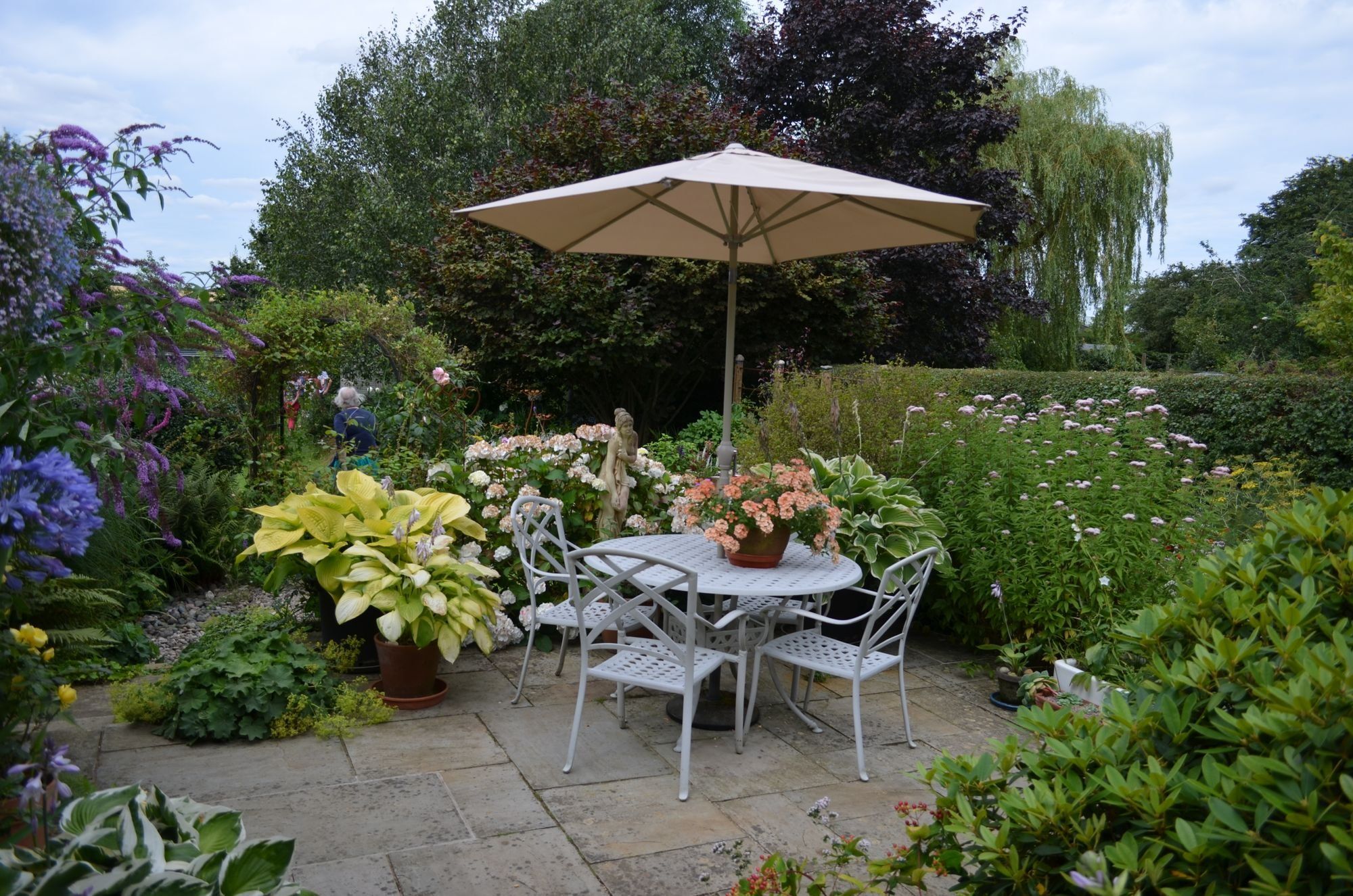
Looking for patio installers in Alloa? Featheredge Property Solutions lay new patios, garden paths and relaid slabs from our base in Alloa, working across Clackmannanshire, Stirling, Falkirk and North Lanarkshire. We dig out properly, build a compacted base, set a fall so rain runs away from your house and bed every slab on mortar. Tell us what you have in mind and we will give you a free, clear written quote.
Why the base decides how long a patio lasts
Most patios that sink, crack or hold puddles were let down by the groundwork, not the slabs. Good patio builders spend more time below ground level than above it.
Standard good practice looks like this:
- Dig out to around 150 to 200mm below the finished level, removing turf, topsoil and roots.
- Sub-base of crushed stone such as MOT Type 1, typically 100 to 150mm deep, laid in layers and compacted with a plate compactor.
- Fall of roughly 1 in 60 to 1 in 80 away from the house, so water drains off instead of pooling against the walls.
- Full mortar bed under each slab, usually 25 to 40mm deep, rather than five dabs at the corners and centre.
- Level at least 150mm below the damp proof course where the patio meets the house.
A full bed takes longer, but it leaves no hollows for water to sit in and freeze. That is the difference between a patio that stays level through a Scottish winter and one that starts rocking after the first frost.
Choosing slabs for Scottish weather
We get a lot of rain and plenty of freeze and thaw, so it pays to choose a slab that suits the setting as well as the look.
- Porcelain is dense and absorbs very little water, so it resists frost, staining and algae. It needs a bonding primer on the back to grip the mortar.
- Sandstone gives a warm, natural finish that suits older houses. It is more porous, so it weathers and may need cleaning now and again.
- Concrete paving is practical, hard wearing and comes in many sizes and textures.
Whatever you choose, a textured or riven surface gives better grip in the wet than a smooth one, which matters on shaded patios that stay damp.
Garden paths
A good path makes a garden easier to use every day, whether that is getting the bins out, reaching the shed or walking down to the washing line. Paths get the same base as a patio, just narrower, with firm edging so the sides do not creep.
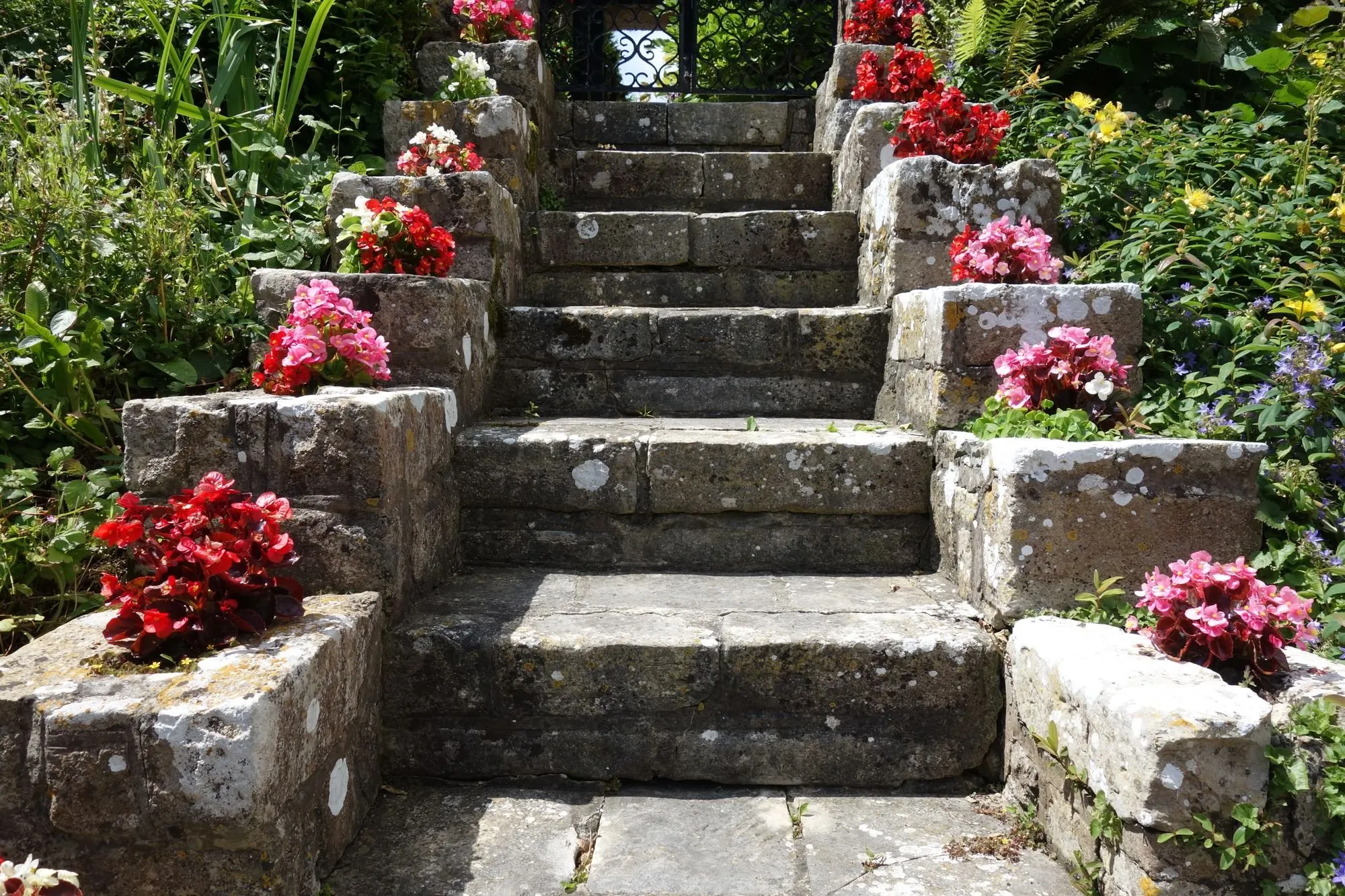
For a softer finish or a lower budget, a path can be edged and filled with gravel instead, and borders alongside can be finished with gravel or bark to keep weeding down. If your path needs steps where the ground changes level, our step repairs page covers rebuilding and repairing those.
Lifting and relaying sunken slabs
Slabs that have sunk, cracked at the edges or started to rock do not always need replacing. Often the slabs are fine and the problem is a thin base or spot bedding underneath. Slab relaying means lifting them, rebuilding the base properly and laying them again level on fresh mortar.
We did this on a front path and driveway in Falkirk, lifting and relaying the slabs and renewing the old gravel around them. You can see the stages in our Falkirk path and driveway job.
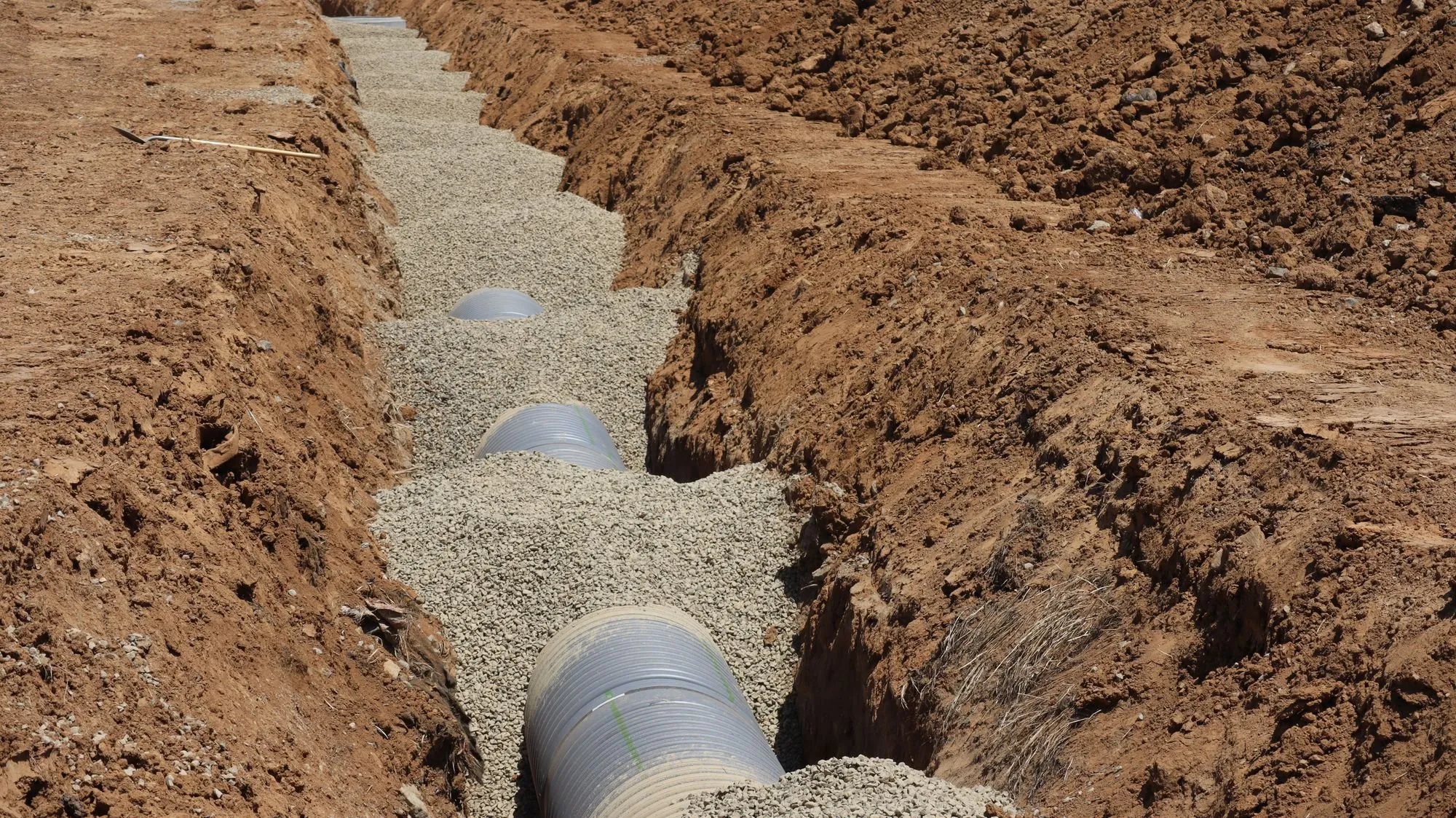
If the ground stays wet or water keeps collecting in the same spot, it is worth sorting garden drainage first. It is far easier before the slabs go down than after.
Front gardens and planning
Most back garden patios fall within permitted development and do not need planning permission. Front gardens are different. Under Scottish rules, a new hard surface between your house and a road has to be porous, or built so that water runs off onto grass or a border within your garden. Extra restrictions apply in conservation areas and near listed buildings. The mygov.scot guidance on laying a hard surface sets out the current rules.
We can plan a front garden patio or path to meet those rules, for example by draining it towards a planted border or a gravel strip. If your home is in a conservation area, check with Clackmannanshire Council or Stirling Council before work starts.
Patios across Clackmannanshire, Stirling, Falkirk and North Lanarkshire
We are based in Alloa and lay patios and paths right across Clackmannanshire, including Tullibody, Sauchie, Alva, Tillicoultry and Dollar. We also build new patios in Falkirk and Larbert, lay garden paths in Stirling and Bridge of Allan, and work across North Lanarkshire.
Whether you need new patio installers for a back garden or someone to relay a path that has sunk, get in touch with a few details and photos. We will give you a free, clear written quote and take the waste away when the job is done.