We carry out concrete repairs in Alloa and across Clackmannanshire, along with new concrete paths, shed bases, render repairs, pointing and making good. As James puts it, we do all types of cement work, from a new base for a garden building to a morning spent patching around the house. We are based in Alloa and also cover Stirling, Falkirk and North Lanarkshire. Get in touch for a free quote.
Cement work is the unglamorous side of property maintenance, but it is what keeps water out of walls, paths level and bases solid. Getting the groundwork, mix and timing right is what stops it cracking a year later.
Concrete paths and bases
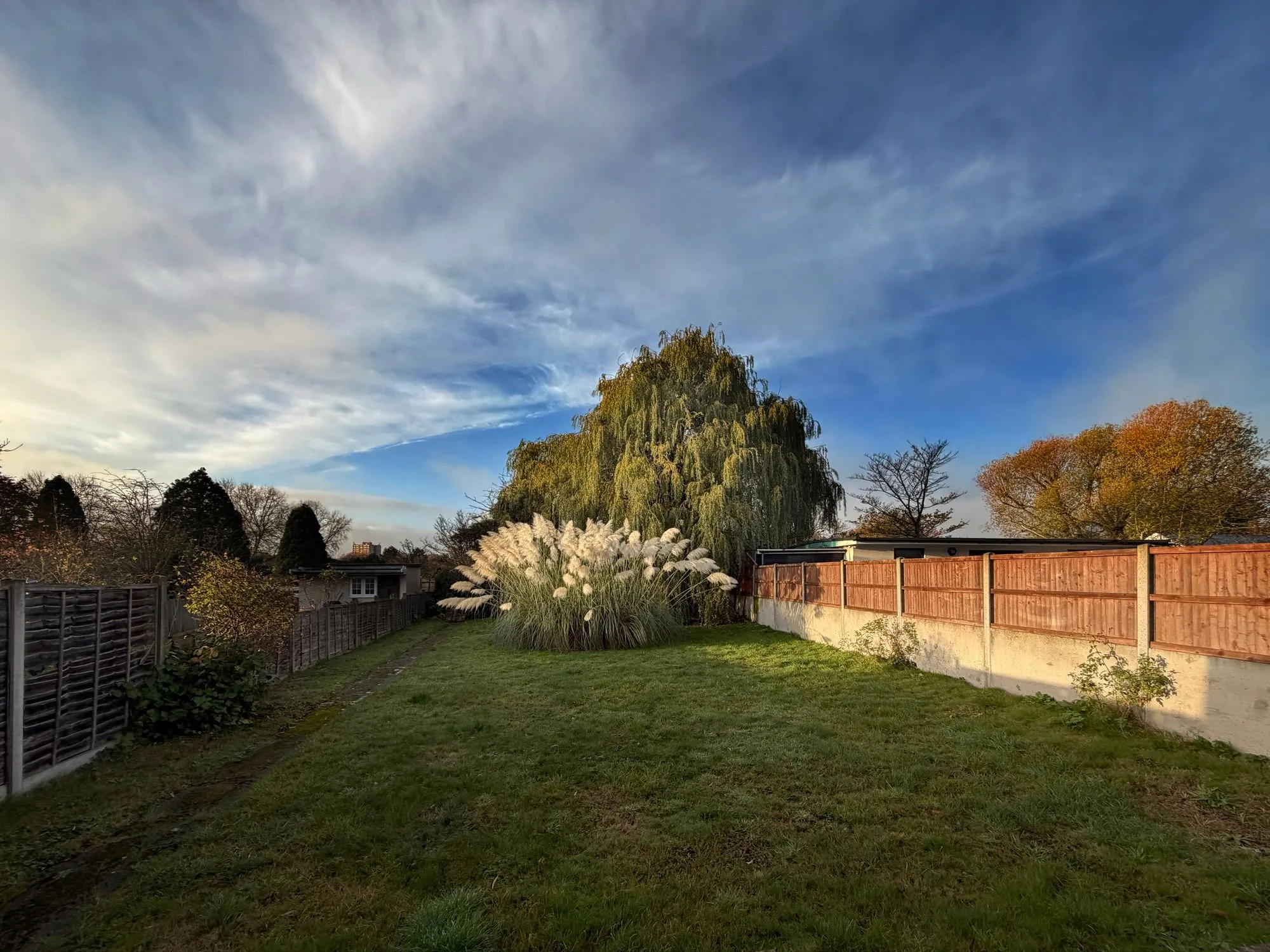
We lay concrete paths, pads for bins and oil tanks, and bases for sheds, summerhouses and garden stores. Every one starts with digging out to the right depth and laying a compacted sub-base, usually around 75 to 100mm deep.
On top of that, a typical concrete slab for a path or shed base is around 100mm thick, set within timber shuttering. Paths are laid to a slight fall so rain runs off rather than sitting in puddles, while shed bases are set level so the building sits square. A base that is out of level will twist the shed on top of it.
New concrete needs time. You can usually walk on it after 24 to 48 hours and drive on it after about 7 days, and it reaches close to full strength after around 28 days. If you would prefer slabs or natural stone to plain concrete, our patios and paths page covers paving.
Render patching
Render on Scottish houses takes a beating from wind and rain. Over time it cracks, and patches come away from the wall behind, which you can often hear as a hollow sound when you tap it.
Render repairs start with cutting the loose and blown areas back to sound material. The edges are prepared, and the patch is built up in coats to match the thickness and texture of the wall around it. On older stone buildings, a hard cement patch can trap moisture, and Historic Environment Scotland’s guide to lime and cement in traditional mortars explains why the right material matters.
Once the render is sound and has cured, usually after about four weeks, a coat of masonry paint can bring the whole wall together. Our exterior painting page covers that side.
Pointing and making good
Plenty of cement work is small but important. Repointing slabs and steps, filling cracks, rebuilding broken edges and making good around pipes, vents and new doors all help to keep water out of the fabric of the house.
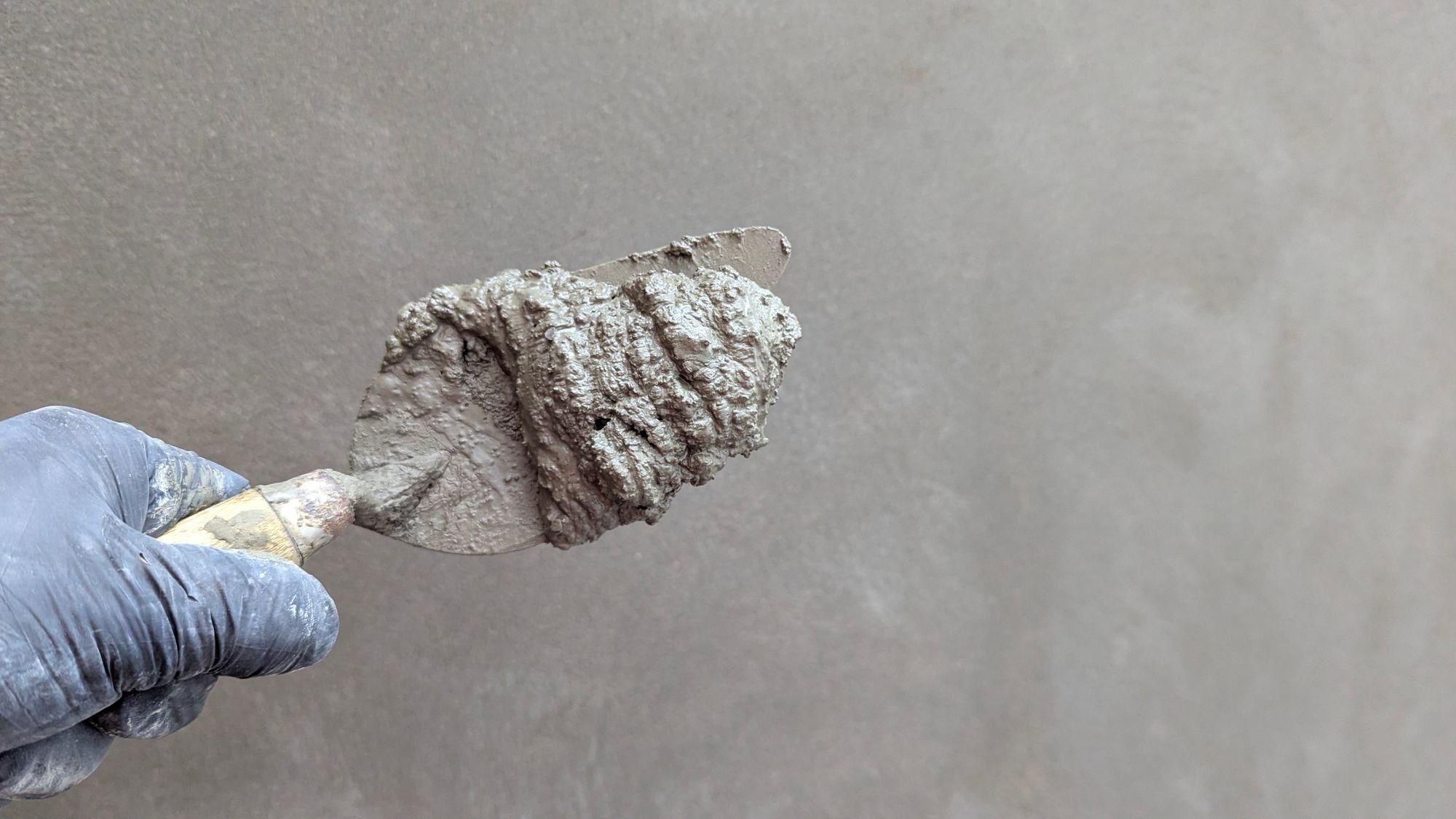
Different jobs need different mixes. A concrete base needs a strong mix with just enough water to work it, render needs to bond firmly to the wall behind, and pointing mortar should be slightly weaker than the brick or stone beside it. Too much water in any mix makes it weaker and more likely to crack as it dries, so we keep mixes consistent from the first barrow to the last.
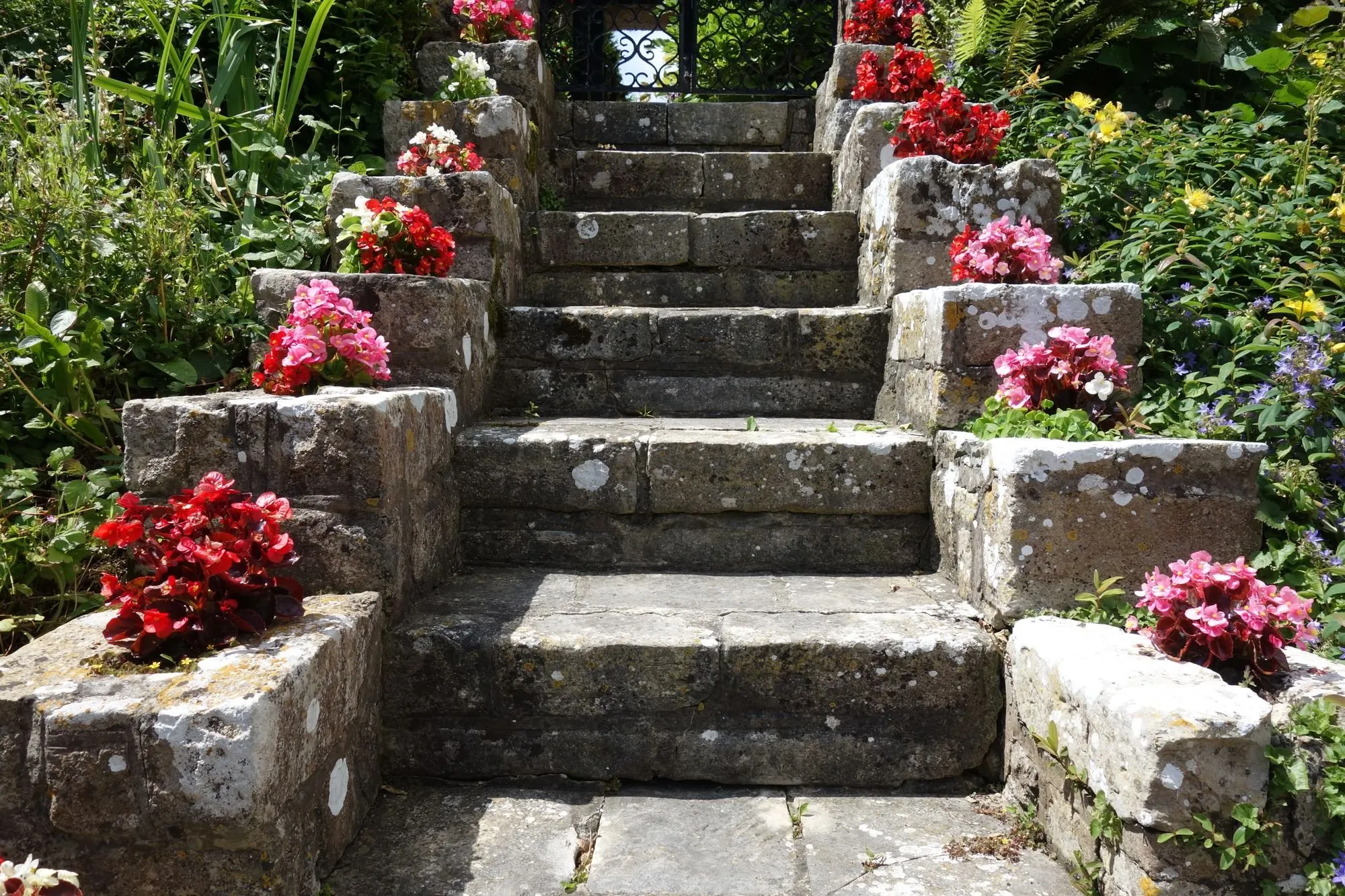
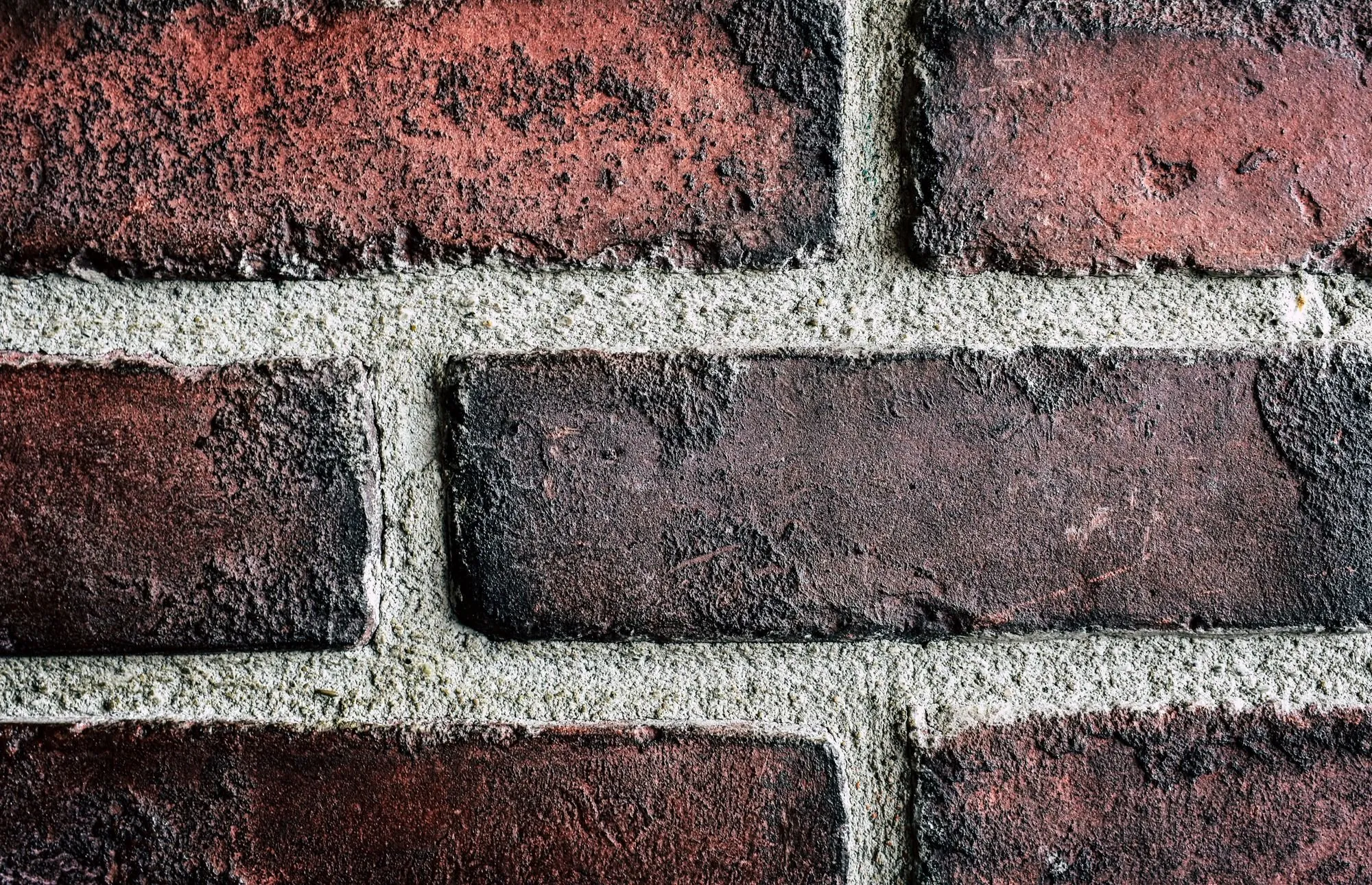
Where the pointing on a brick or stone wall has worn away, our brickwork repairs page covers repointing in more detail. For broken or crumbling front and garden steps, see our step repairs.
Repairing cracked or sunken concrete
Cracked driveway edges, sunken concrete paths and broken kerbs are common around older properties. Fine surface cracks can often be cut out and filled. Where concrete has sunk, rocked or broken into pieces, the ground underneath has usually moved, and a patch on top will not last.
In that case we will recommend breaking the concrete out, checking and recompacting the sub-base and laying it again properly. We will tell you honestly whether a repair will hold or whether relaying is the better option.
Weather matters for every concrete repair. Fresh concrete and render should not be laid when frost is forecast or temperatures are below about 5°C, and in hot, drying sun they need protecting so they do not dry out too fast. We plan work around the forecast and protect new work while it cures.
For landlords and letting agents, we can also work through a list of small repairs at a property in one go.
Cement work across our areas
We carry out concrete repairs in Alloa and throughout Clackmannanshire, including Tullibody, Sauchie, Menstrie, Alva and Dollar. Our Clackmannanshire area page has more on the towns we cover. We also work across Stirling, Falkirk and North Lanarkshire.
We have over 15 years’ experience and we are fully insured. For concrete repairs in Alloa or any other cement work nearby, send us a few details or give us a call for a free quote.