Featheredge Property Solutions puts in garden drainage in Stirling, Alloa and across Clackmannanshire for lawns and borders that stay wet long after the rain has stopped. We are garden drainage contractors based in Alloa, fitting French drains and soakaways and improving heavy ground so water has somewhere to go. If your garden turns to a bog every winter, get in touch for a free quote.
Why gardens here stay wet
Much of the land around Stirling and the Forth valley sits on heavy clay. Clay holds water well, which suits plants in summer, but it means a waterlogged garden can stay soggy for weeks from autumn through to spring.
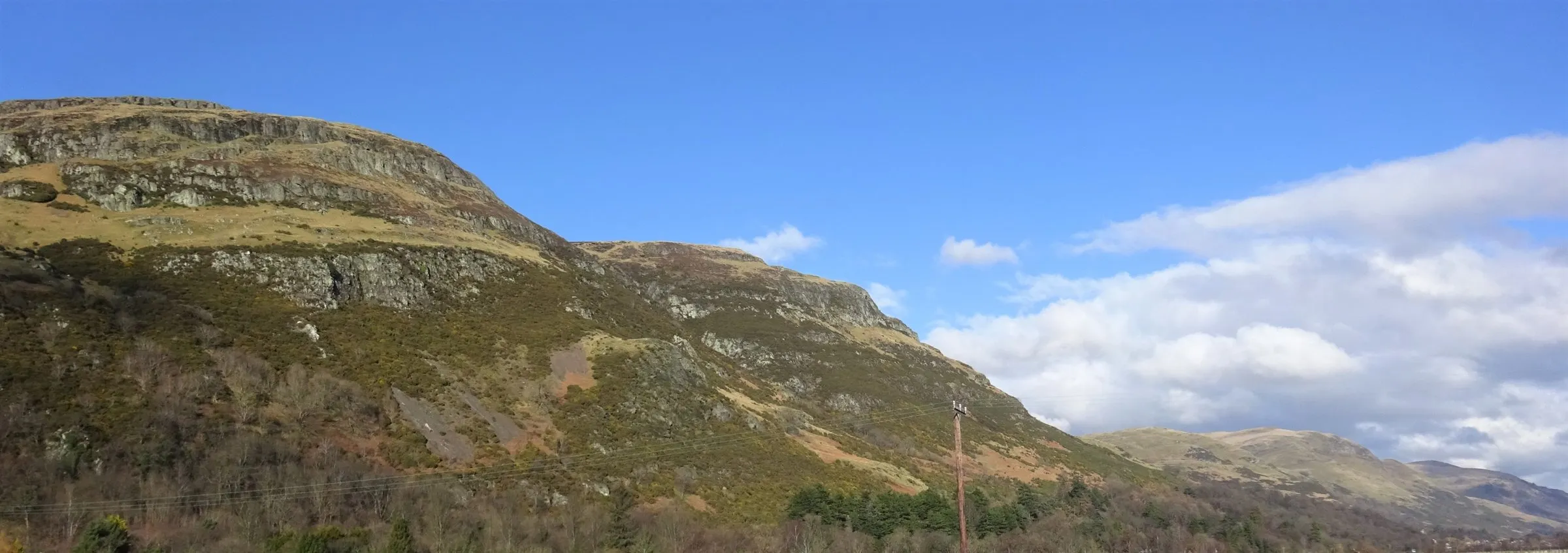
Slopes play a part too. The Hillfoots towns of Menstrie, Alva, Tillicoultry and Dollar sit at the foot of the Ochils, and gardens there can collect run-off from the ground above. Water that falls higher up has to go somewhere, and often it ends up in the lowest lawn.
New-build gardens have their own problem. Ground driven over by site machinery is often badly compacted, then covered with a thin layer of topsoil. Rain cannot get down through it, so it sits on the surface. The RHS guide to waterlogged lawns lists compaction, heavy clay and poor preparation as the main causes, and all three are common in gardens here.
What is a French drain?
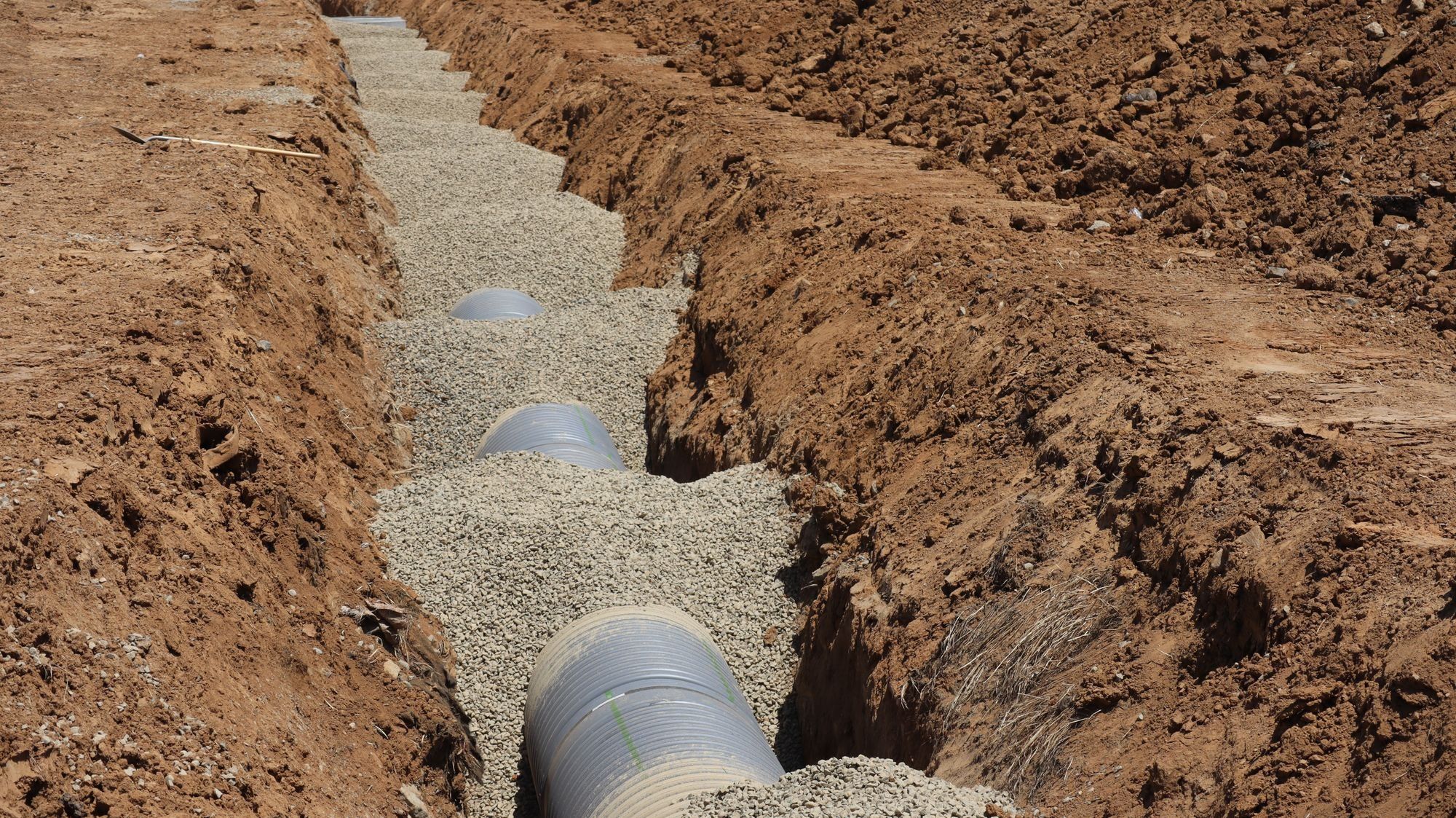
A French drain is a trench dug to a gentle fall, filled with clean stone and usually fitted with a perforated pipe. Water in the surrounding soil seeps into the stone, runs along the pipe and is carried away to an outlet, so it no longer sits in your lawn or border.
As a general guide, a garden French drain is typically:
- 450 to 600mm deep, deeper where the wet layer sits lower
- 150 to 300mm wide, enough for the pipe and a good surround of stone
- Laid to a fall of around 1 in 100, so water keeps moving towards the outlet
- Fitted with a 100mm perforated pipe, bedded in clean, washed stone of around 20mm
On a larger lawn, several drains can run across the wettest area and feed into one outlet. Once the work is done, the surface is reinstated with topsoil and seed or fresh turf, so you are left with a usable lawn rather than a scar across the garden.
Soakaways, and where they can go
A French drain needs somewhere to send its water. In many gardens that is a soakaway: a pit filled with stone or plastic crate units that holds the water and lets it seep back into the ground.
Where a soakaway goes matters. The Scottish Government’s domestic building standards technical handbook advises that a soakaway for a house should be at least 5m from the dwelling and the boundary, and that the ground is tested for how quickly it drains first. That protects the foundations and keeps water off your neighbour’s land.
On heavy clay, a soakaway will not always cope. If the ground drains too slowly, we will say so and talk through the other options for getting the water away safely.
Drainage before patios, paths and turf
The best time to sort drainage is before anything new goes on top. A patio laid on wet ground, or an artificial lawn over clay that will not drain, can end up with standing water that is much harder to fix later.
That is why drainage should be part of the plan for any patio or path, new lawn or artificial grass installation. If the ground needs help, it is far simpler to deal with at the start than to lift finished work.
Signs your garden needs drainage
Some wet ground is normal after a heavy downpour. These signs suggest the garden needs more than time to dry out:
- Puddles still sitting on the lawn two or three days after rain
- Moss spreading through the grass and bare, muddy patches
- Grass that squelches underfoot for most of the winter
- Plants in borders rotting at the base rather than growing
- Water pooling against the house, a wall or a shed base
Left alone, a waterlogged lawn thins out, and walking on the wet ground compacts it further. The problem usually grows each year rather than settling down.
Not every wet garden needs a full drainage system, though. A downpipe emptying onto the lawn can often be redirected into a proper drain. Compacted ground can be broken up and improved with grit and organic matter so water can get down through it. Working out which fix suits your garden comes first, so you only pay for the work that will actually make a difference.
Garden drainage across Stirling, Clackmannanshire and beyond
We are based in Alloa and put in garden drainage across Clackmannanshire, including Tullibody, Sauchie and the Hillfoots, as well as in Stirling, Bridge of Allan, Falkirk and North Lanarkshire. Drainage often goes hand in hand with a new lawn or patio, and we can handle both. For garden drainage in Stirling or anywhere in our area, get in touch for a free quote.