Featheredge Property Solutions lay artificial grass in Stirling and carry out artificial grass installation in Alloa, Falkirk and across Clackmannanshire and North Lanarkshire. We lift the old lawn, build a compacted, free-draining base, fix firm edging and join the grass neatly so it stays flat and drains for years. Send us a few details and photos of your garden for a free, clear written quote.
What goes underneath an artificial lawn
The part of an artificial lawn you never see decides how long it lasts. Most problems people have with fake grass, such as dips, ripples, puddles and weeds pushing through, come from a rushed base rather than the grass itself.
A good base usually follows these steps:
- Dig out the old lawn and soil to around 75 to 100mm below the finished level.
- Sub-base of crushed stone, often 50 to 75mm, laid and compacted with a plate compactor.
- Laying course of sharp sand or grano dust, around 20 to 25mm, levelled and compacted again to give a smooth bed.
- Weed membrane to stop anything growing up from below.
- Edging of treated timber or composite fixed around the perimeter, so the grass has something firm to hold on to.
It is more work than rolling grass onto soil, but it gives a lawn that stays level and does not need redoing in a couple of years.
Where artificial grass makes sense, and where real turf is better
Artificial grass works best where a real lawn struggles:
- Shade, such as north-facing gardens or corners under trees where grass thins out
- Wet ground, where a back green turns to mud every winter
- Pets, where dogs wear tracks or dig holes
- Children, where a busy lawn never gets a chance to recover
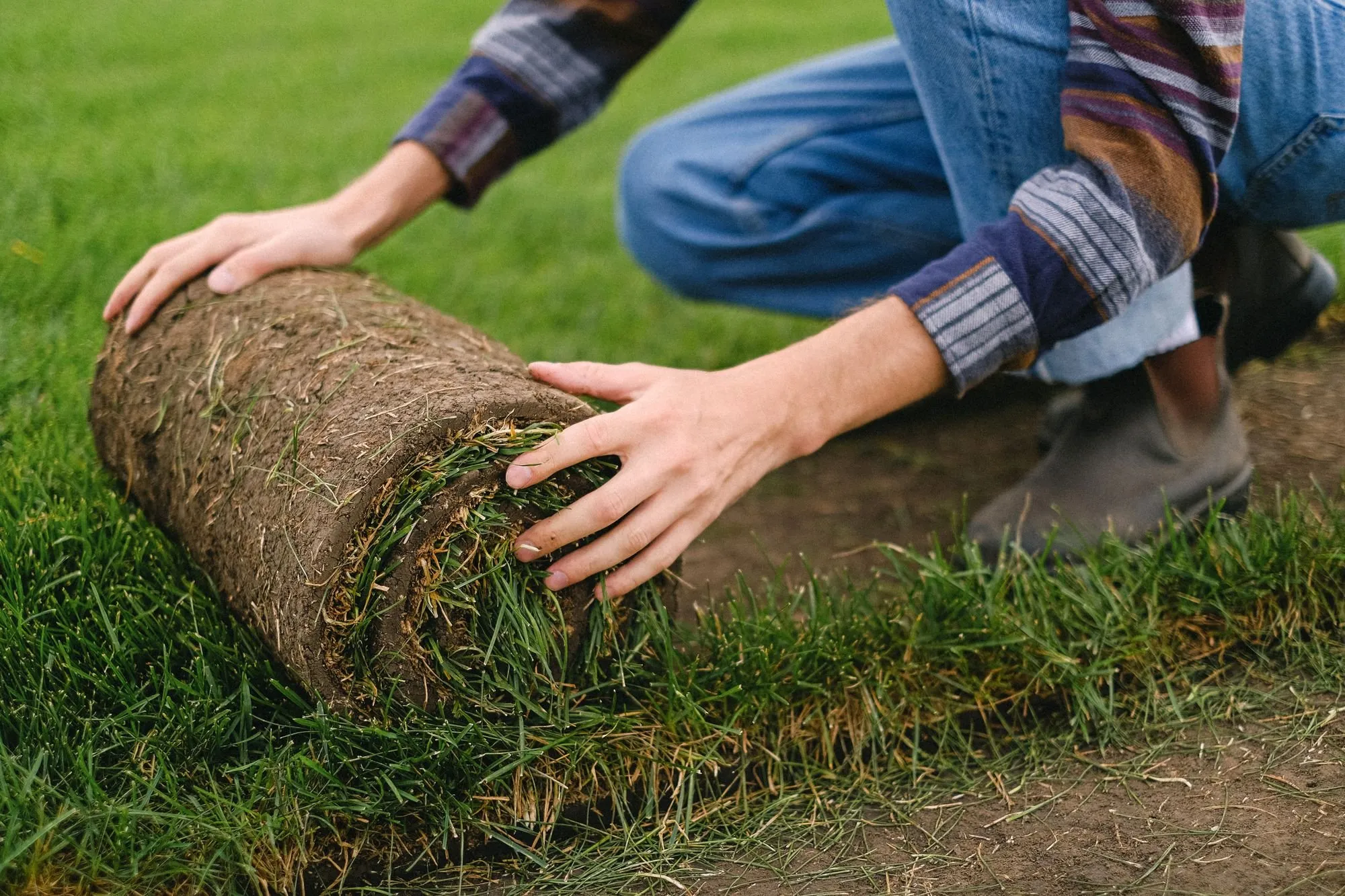
It is not the right answer for every garden. If you have a sunny, open lawn on decent soil, enjoy mowing or want grass that feeds birds and insects, new turf may suit you better. On a south-facing patch, artificial grass can also get warm to the touch on a hot summer day, which is worth knowing if children or pets like to lie on it.
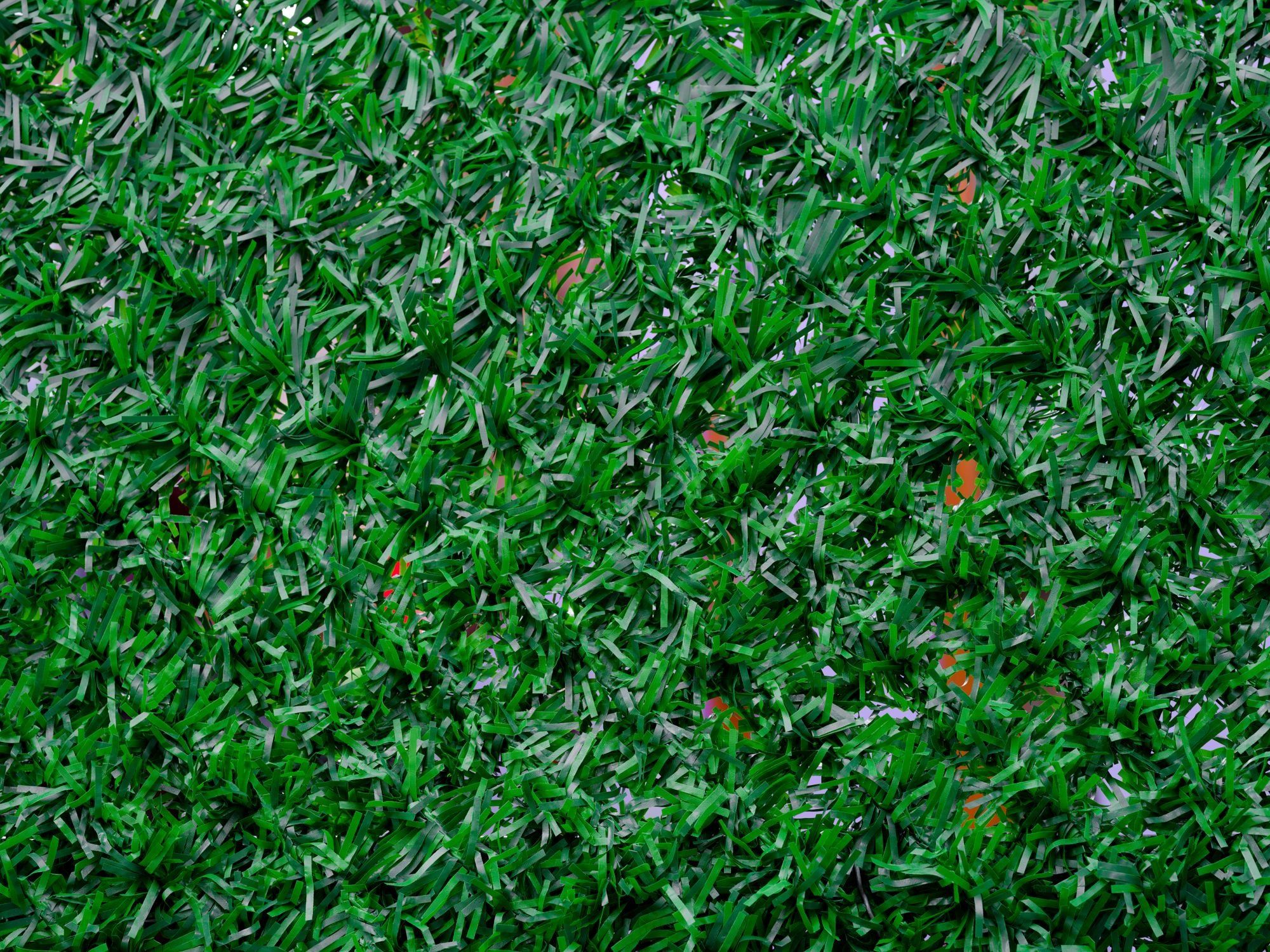
The grass itself varies too. Garden lawns commonly have a pile height of around 30 to 40mm. A shorter, denser pile stands up better to heavy use from dogs and children, while a longer pile looks and feels softer underfoot.
Joins, edges and infill
Most lawns need more than one roll, which means joins. The pile on each piece has to run the same way so both look alike, and the seams are glued onto joining tape. Done carefully, you should struggle to find them.
The edges are fixed to the timber or composite edging so the grass cannot creep, lift or curl. The last step is brushing kiln-dried sand into the fibres. This weighs the grass down, protects the backing and helps the blades stand up rather than lying flat.
Drainage on heavy ground
We get a lot of rain here, and many gardens around Alloa, Tillicoultry and the Hillfoots sit on heavy clay. Artificial grass drains through its backing, but the water still has to go somewhere once it reaches the ground below. As the RHS explains in its advice on clay soils, clay drains slowly after rain and waterlogs when compacted.
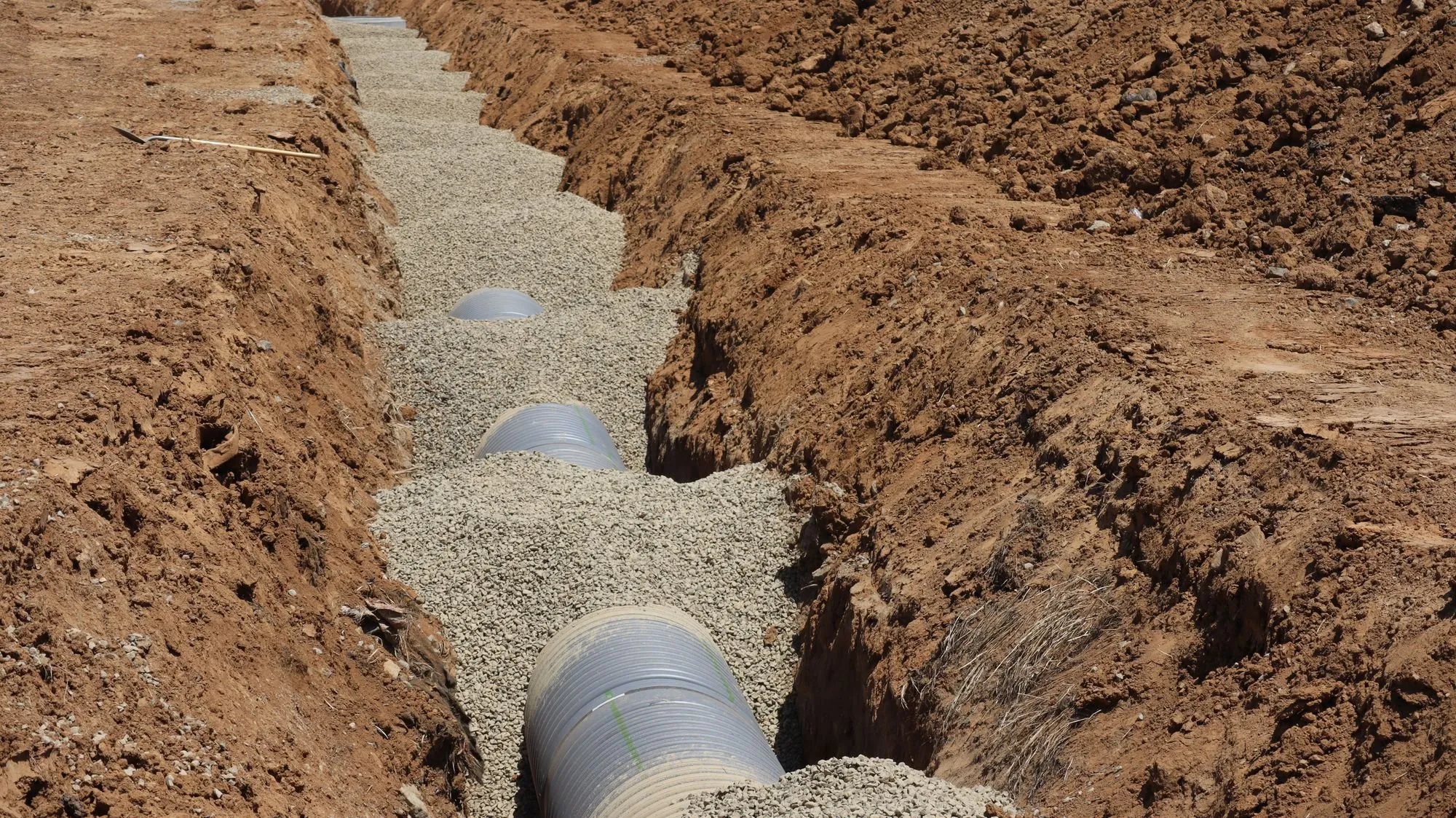
On ground like that, a deeper sub-base is sometimes enough. Where water already sits on the lawn for days, garden drainage such as a French drain or soakaway is better put in first. It is far easier to find that out before the grass goes down than after.
Looking after artificial grass
Artificial grass is low maintenance, not no maintenance. A light brush against the pile every few weeks keeps the fibres lifted, and clearing leaves and moss stops them breaking down on the surface. A leaf blower or stiff brush does the job, and a hose down now and again keeps it fresh.
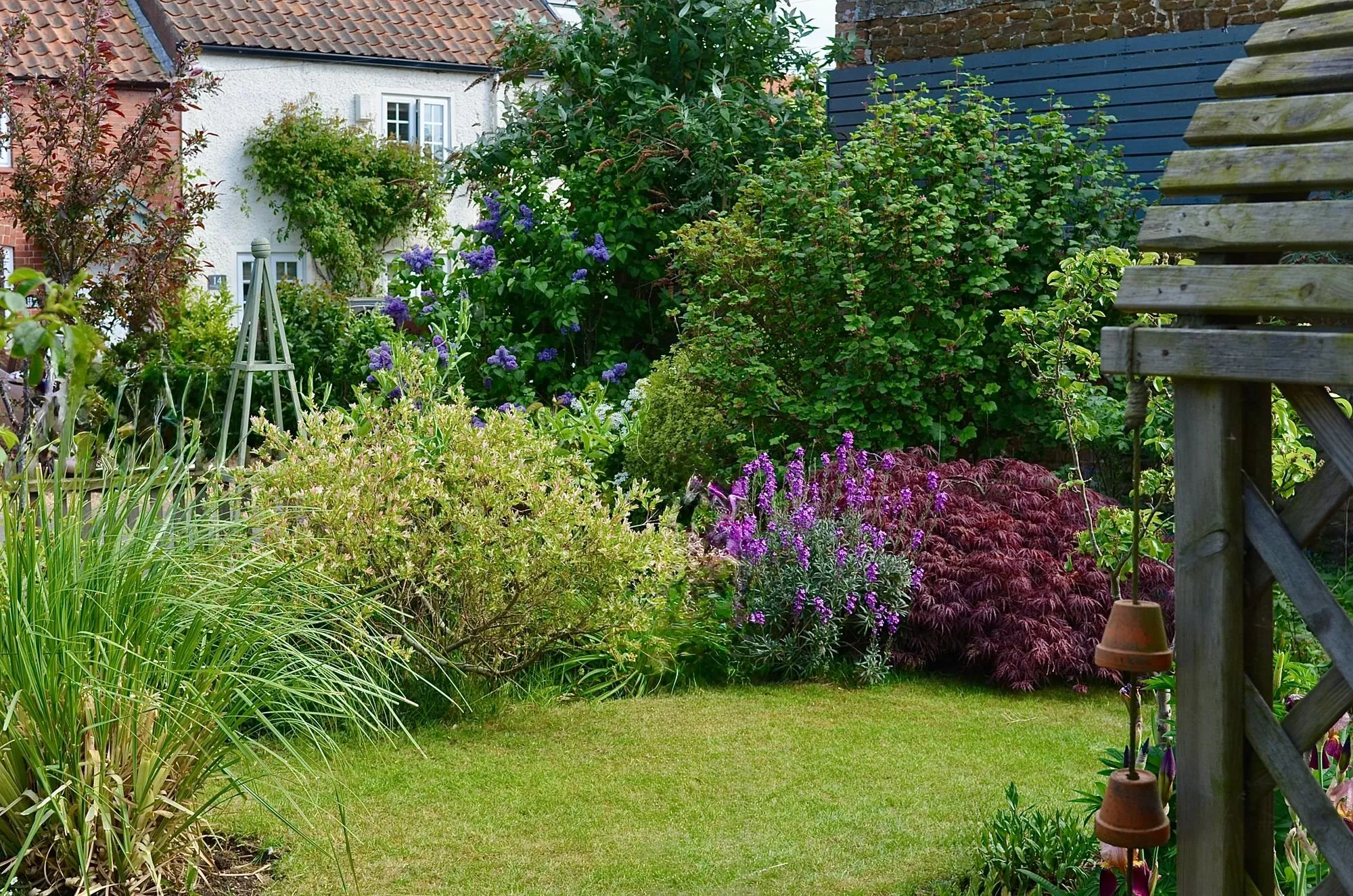
Borders around the lawn often look best finished with gravel or bark, which keeps soil off the grass. If you are planning a bigger change, artificial grass often forms part of a wider garden makeover.
Installation across our areas
We are based in Alloa and install artificial grass across Clackmannanshire, including Sauchie, Menstrie and Clackmannan. We lay artificial grass in Stirling, Dunblane and Bridge of Allan, in Falkirk and Grangemouth, and in Cumbernauld across North Lanarkshire.
Before we quote, it helps to know:
- The rough size and shape of the lawn
- How we get into the garden, and whether barrows can reach it
- Whether water sits on the lawn after rain
- Who uses it most, such as children, dogs or both
If you are weighing up artificial grass installation for a shady, wet or busy garden, get in touch with a few details and photos. We will give you a free, clear written quote and take the old turf and waste away when we finish.